We have a menopause policy which outlines the symptoms of menopause people might be experiencing and what support can be offered.
Its important as a manager you understand what the menopause is and the effects it can have on people. The NHS offers an overview.
You can access menopause awareness training on iHasco.
Building relationships based on trust, empathy and respect will make it easier for an employee to feel comfortable about raising a health issue like the menopause. Regular and informal chats can provide the forum for a conversation about any changes to someone’s health situation, including the menopause.
If you have concerns about someone’s wellbeing or performance, ask general, open questions such as, ‘How are you doing at the moment?’ or ‘I’ve noticed you’ve been arriving late recently, and I wondered if you’re okay?’. It’s important you don’t make assumptions – everyone is different, so take your lead from the individual.
See guidance on managing difficult conversations.
You may need to complete a risk assessment which includes items such as temperature and ventilation and access to toilet facilities and cold water. You should speak to the health and safety manager if risks are identified.
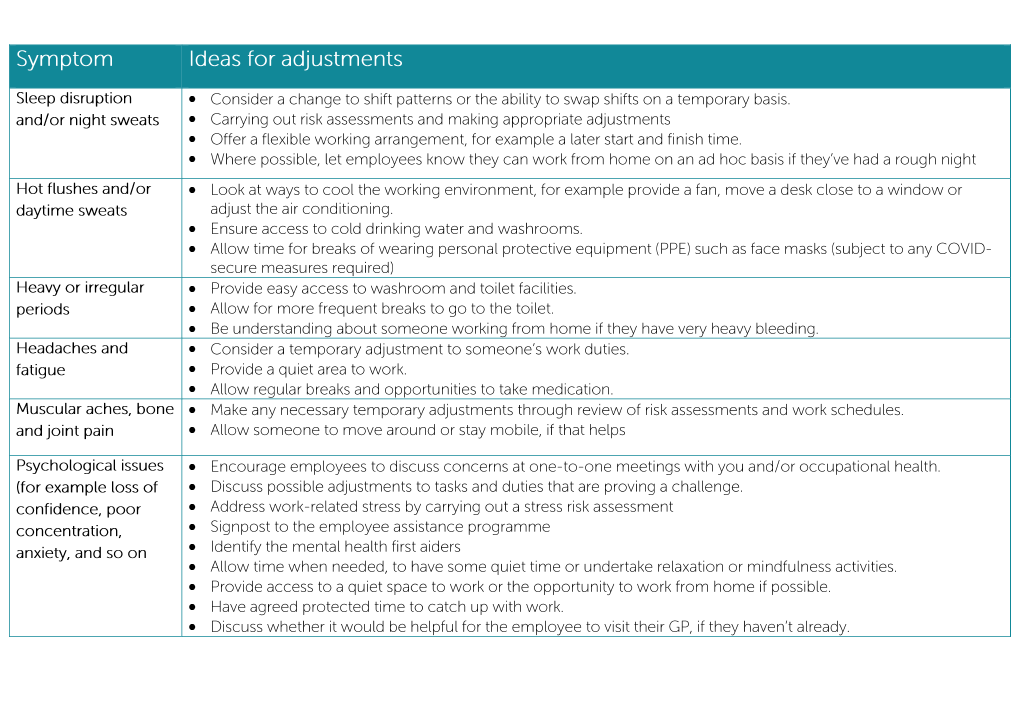
You should tailor adjustments to an individual. The below table shows some symptoms and some ideas of the types of adjustment which could be put in place.
Normal absence reporting rules apply.
If someone if absent for over 7 days, they will need a GP certificate.
We can offer support by signposting employees to their GP of offering an occupational health referral if it is appropriate.
It might not always be obvious who is experiencing menopause symptoms so it is important to remember that of those people who can experience symptoms.
They include:
Everyone will be treated and supported equally.
If someone tells you about their health condition, including menopausal symptoms, this should be treated as confidential. If they want information about their condition to be
shared, consent must be explicit. You should discuss with them who will be told and by
whom, as well as the information they do or don’t want shared with colleagues.
Menopause at work offers online training for line managers. Led by local Menopause Specialist Nurse Sarah Leroux you will hear how Menopause symptoms can affect your team and, how simple adjustments can make a big difference to your workforce and productivity. Menopause at Work – Events
